
Quick Answer: Sativa-dominant and balanced hybrid strains with high pinene, limonene, or terpinolene content support focus best. Low to mid THC levels (15 to 20%) work better than high THC for concentration. Top picks include Jack Herer, Durban Poison, Green Crack, Blue Dream, and Sour Diesel. Avoid high-myrcene indica strains during work hours, as they tend to produce body relaxation that reduces focus.
I used to think weed and work did not belong in the same sentence. My early experience with cannabis was almost entirely evening use. I used heavy indicas that made the couch feel like the only sensible place to be. Then a grower friend handed me a jar of Jack Herer before a long writing session and told me to try one small hit before I started.
Three hours later I had written more than I usually manage in a full day, and I was not tired, foggy, or distracted. That was the moment I understood that weed for productivity was not a contradiction. It was a matter of choosing the right strain.
This guide covers the best weed strains for productivity. What makes a strain good for focus, the specific strains worth growing or buying for daytime use, and how to avoid the common mistake that turns a focus strain into a distraction strain, you’ll learn it all.
Disclosure: This post contains affiliate links. Purchases made through our links may earn us a small commission at no extra cost to you. We only recommend products we have genuinely researched and believe in.
Table of Contents
What Makes a Strain Good for Focus
Not all cannabis supports focus. Strain type, cannabinoid content, and dose drive the effect you feel. Three variables matter most, and understanding them lets you evaluate any strain, not just the ones on this list.
Strain Type
Strains associated with uplifting and cerebral effects tend to support attention and task engagement. Many people lean toward sativa-dominant or balanced hybrids for daytime use. Indica-leaning strains are more likely to produce body relaxation, which can reduce focus.
This does not mean every sativa works and every indica fails. It means sativa-dominant genetics start from a baseline that is more compatible with staying mentally engaged, while indica-dominant genetics start from a baseline of physical relaxation that competes with productivity.
THC Strength
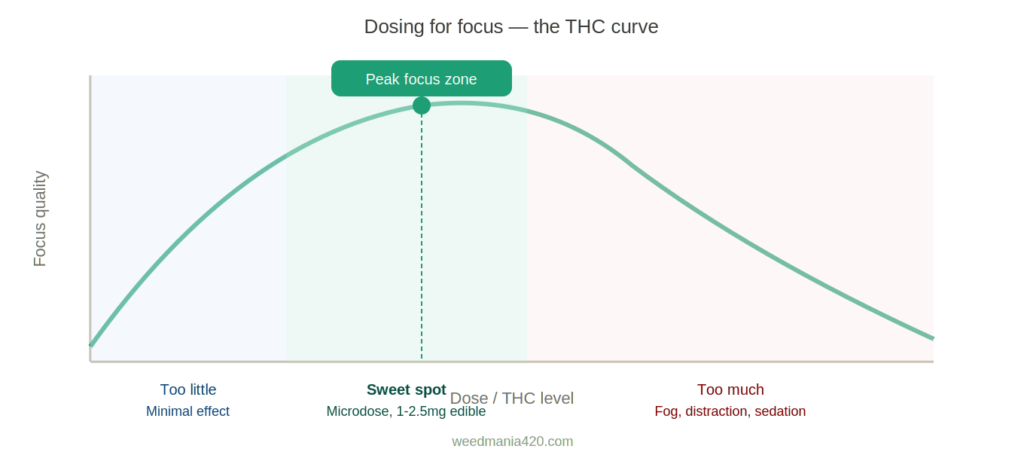
Low to mid THC levels tend to work better for productivity. High THC levels can lead to mental fog and reduced concentration. This is the single most counterintuitive point for people new to using cannabis for focus. The instinct is to reach for the highest THC percentage available, assuming more potency means a better experience. For focus specifically, that instinct works against you.
A strain in the 15 to 20% THC range, consumed in a small dose, tends to produce alertness without the cognitive fog that higher doses or higher-potency strains introduce. Microdosing low THC levels, especially in the morning or early afternoon, improves focus without impairment.
Terpene Profile
Aroma tells you a lot. Many daytime-leaning strains list terpenes like limonene, pinene, or terpinolene, all of which may potentially help contribute to focus and clarity. These three terpenes show up again and again across every strain on this list, and understanding what each does individually makes it much easier to evaluate new strains as they appear on dispensary menus or seed bank pages.
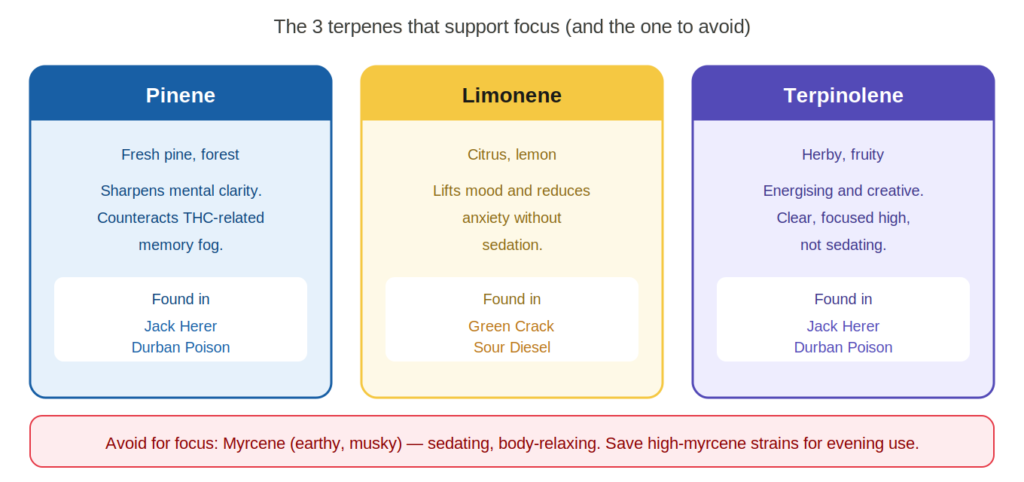
Pinene sharpens mental clarity and counteracts some of the short-term memory impairment associated with THC. Choose uplifting terpenes like pinene for alertness.
Limonene lifts mood and reduces anxiety without sedation, which keeps focus sessions feeling pleasant rather than effortful.
Terpinolene produces a distinctly energising and creative mental quality, consistently described as producing a clear, focused high rather than sedation.
For a full breakdown of how to read a terpene panel and predict effects before you buy or grow, see our terpene profile guide.
The Best Strains for Focus and Productivity
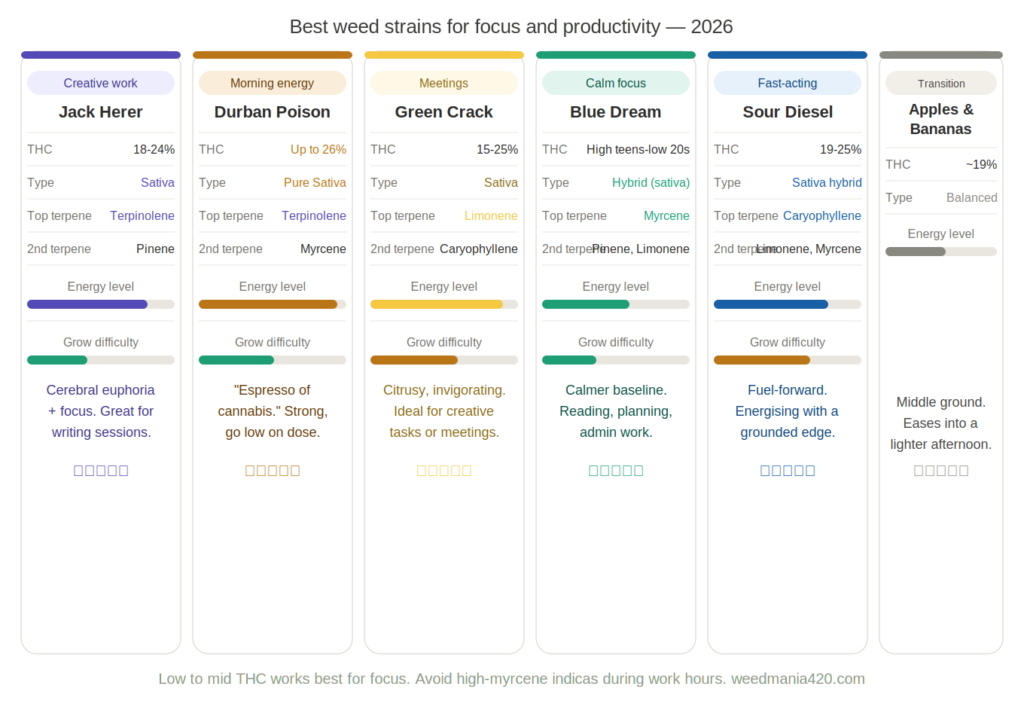
Jack Herer
Jack Herer blends cerebral euphoria with focus, great for productivity or creative bursts. This is the strain that converted me, and it remains one of the most consistently recommended focus strains across every major source. Its terpinolene-forward profile produces the clear, energising effect that defines a good work strain, while a secondary pinene presence adds the mental sharpness that pairs well with sustained concentration.
Jack Herer is also one of the more forgiving strains to grow at home. If you are setting up your first 2×2 grow tent, Jack Herer’s resilience and moderate growing difficulty make it a strong choice for a first sativa-leaning grow.
THC range: Typically 18 to 24% Dominant terpenes: Terpinolene, pinene, caryophyllene Best for: Creative work, writing, long focus sessions
Durban Poison
Durban Poison stands out as a South African landrace strain, long regarded as one of the most popular strains worldwide. As a pure sativa known as the espresso of cannabis, it is often contrasted with hybrid strains for its singular energetic effects. It delivers a clear-headed, cerebral high known for being more energising and racy compared to many indica-leaning varieties, making daily tasks feel more approachable.
The espresso comparison is apt and worth taking seriously as a dosing signal. With up to 26% THC, its potency often surpasses that of most focus-oriented strains, which means the low-dose guidance matters more here than with milder strains. A small amount of Durban Poison goes further than the percentage might suggest, and overdoing it pushes past alertness into the racy, scattered territory that undermines focus rather than supporting it.
THC range: Up to 26% Dominant terpenes: Terpinolene, myrcene, pinene Best for: Morning use, task-based work, anyone who wants energy without sedation
Green Crack is a classic daytime strain known for its intense focus-enhancing properties. Its citrusy flavour and invigorating high make it ideal for creative tasks or meetings. The name is blunt, but the effect profile lives up to it: this is one of the most reliably energising strains in cultivation, with a citrus-forward terpene profile that signals strong limonene content even before you check the lab panel.
Green Crack
Green Crack, Durban Poison, and Jack Herer are popular for task-based and creative productivity, and the three frequently appear together on focus-strain lists for good reason. They represent three slightly different flavours of the same underlying terpinolene and pinene-driven clarity, which means if one does not suit your particular response, the other two are worth trying before concluding that sativas in general do not work for you.
THC range: Typically 15 to 25% Dominant terpenes: Limonene, caryophyllene, myrcene Best for: Meetings, creative tasks, social productivity
Blue Dream
Blue Dream is a widely recognised sativa-dominant hybrid with THC levels that typically range from the high teens into the low 20s. Its aroma blends sweet berry with gentle herbal notes, thanks to its Blueberry and Haze lineage.
Blue Dream occupies a useful middle ground on this list. Its terpene profile (covered in detail in our terpene profile guide, where Blue Dream serves as the primary worked example) includes meaningful myrcene alongside pinene and limonene. The myrcene component means Blue Dream carries slightly more of a relaxed undertone than the purer sativas above, which makes it a better fit for focus work that benefits from a calmer baseline, such as reading, planning, or administrative tasks, rather than high-energy creative bursts.
THC range: High teens to low 20s Dominant terpenes: Myrcene, pinene, limonene Best for: Calm focus, reading, planning, administrative work
Sour Diesel
Top strains like Sour Diesel, Tangie, Chocolope, Jack Frost, and Durban Poison deliver energising, euphoric effects that support clear-headed productivity when dosed correctly. Sour Diesel’s pungent, fuel-forward aroma signals a different terpene emphasis than the citrus and floral strains above. Its profile leans toward caryophyllene and limonene, producing an energising effect with a slightly more grounded edge than pure terpinolene strains.
Sour Diesel has a reputation for being one of the faster-acting strains in terms of onset, which makes it a popular choice when someone needs a focus boost on a tighter timeline rather than planning a session well in advance.
THC range: Typically 19 to 25% Dominant terpenes: Caryophyllene, limonene, myrcene Best for: Fast-acting focus boost, energising effect with a grounded edge
Apples & Bananas
Apples & Bananas is a balanced hybrid strain with THC levels around 19%. Its lineage includes Platinum Cookies and Granddaddy Purple genetics, which might suggest a more sedating profile than its effects actually deliver. The balanced hybrid classification here is doing real work: this is a strain that sits in the middle ground between energising sativas and relaxing indicas, making it suitable for focus work that needs to transition smoothly into a less demanding part of the day.
THC range: Approximately 19% Best for: Balanced focus that does not need to be maintained all day
How to Dose for Focus, Not Distraction
The biggest mistake people make when trying cannabis for productivity is treating it like recreational use and dosing accordingly. The strain matters, but dose matters just as much, possibly more.
Start with microdoses. Microdosing low THC levels, especially in the morning or early afternoon, improves focus without impairment. A single small inhalation, or for edibles, a dose in the 1 to 2.5mg THC range, is the starting point. You can always take more after assessing the effect. You cannot easily undo an overdose that has pushed you into fog rather than clarity.
Consider your consumption method. Vaping is best for quick resets, edibles for deep work, tinctures for balance. Vaping at low temperature also preserves the terpene profile most effectively, which matters when the terpenes are doing much of the focus-supporting work. Smoking and high-temperature vaping degrade monoterpenes like pinene and limonene faster than low-temperature vaping does.
Test in low-stakes settings first. Will cannabis make me sleepy instead of focused? That depends on the strain. Sativas and CBD-dominant hybrids are usually chosen for clarity, but individual response varies. Before relying on a new strain for an important work session, test it during a less critical task to understand how your body responds.
Support the effect with good habits. Supporting habits like hydration, movement, and a distraction-free environment boost cannabis’s effects. None of the strains above will compensate for a chaotic workspace or dehydration. They amplify whatever baseline conditions you bring to the session.
What to Avoid
High-myrcene indicas during work hours. Myrcene-dominant strains are often found in cannabis strains with a musky and earthy aroma, and may possess sedative properties, making it useful for relaxation and sleep. That sedating quality is exactly what you do not want during a focus session. Save these for evening use.
High THC without a clear reason. High THC content makes strains potentially overwhelming, and for focus specifically, the ceiling effect kicks in faster than people expect. More potency does not mean more focus past a certain point. It means more risk of the opposite.
Skipping the terpene check. THC percentage alone tells you almost nothing about whether a strain will support focus or undermine it. Two strains at 20% THC can produce completely different experiences depending on whether pinene and limonene or myrcene dominate the profile. Always check terpenes, not just potency, when selecting a focus strain.
Also, using the right strains for productivity will not save you from bad habits that thwart your progress. I wrote an article on how to stay productive while high, check it out for practical tips to set yourself up for success.
Growing Focus Strains at Home
If you are growing rather than buying, the sativa-dominant genetics on this list tend to favour slightly different environmental targets than indica-heavy strains. Sativas typically stretch more in veg and benefit from the training approaches covered in our rope ratchet hangers guide for managing canopy height as plants reach upward.
Terpinolene and pinene-heavy strains like Jack Herer and Durban Poison are also sensitive to the late-flower temperature management covered in our VPD chart guide. Monoterpenes degrade in heat, and since the terpenes are the entire point of a focus strain, protecting them through the final weeks of flower is not optional if you want the finished product to deliver the clarity the genetics are capable of.
For the organic feeding approach that supports strong terpene expression in sativa-leaning genetics, our top dressing guide covers the amendment schedule that works well alongside these strains’ typically longer flowering windows.
Quick Reference
| Strain | THC Range | Dominant Terpenes | Best For |
| Jack Herer | 18-24% | Terpinolene, pinene | Creative work, writing |
| Durban Poison | Up to 26% | Terpinolene, myrcene, pinene | Morning energy, task work |
| Green Crack | 15-25% | Limonene, caryophyllene | Meetings, creative bursts |
| Blue Dream | High teens-low 20s | Myrcene, pinene, limonene | Calm focus, reading |
| Sour Diesel | 19-25% | Caryophyllene, limonene | Fast-acting boost |
| Apples & Bananas | ~19% | Balanced hybrid profile | Transitional focus |
FAQ
Can cannabis really help with ADHD-style focus issues? Some report improved focus, though results vary widely. CBD-rich strains are often chosen for this purpose. This is an area with significant individual variation, and what works for one person’s attention difficulties may not translate to another. Starting with the low-THC, terpinolene or pinene-forward strains above and microdosing is the lowest-risk way to test individual response.
What is the best consumption method for productivity? Tinctures and vapes allow precise, fast-acting doses. Vaping at low temperature also better preserves the focus-supporting terpenes. Edibles work for longer deep-work sessions but take longer to onset and are harder to dose incrementally.
Will any sativa work for focus? No. Sativa classification is a starting signal, not a guarantee. The terpene profile is the more reliable predictor. A sativa with high myrcene can still produce a relaxed effect, while a balanced hybrid with high pinene and limonene can outperform a “pure sativa” for focus purposes.
Should I use these strains before or during work? Before, with enough lead time to assess the onset before you need to be productive. Not all sativas will sharpen your mind, and the wrong strain or dose can actually make concentration harder. A short test period before committing to a full work session prevents wasted time if the effect does not land the way you expected.
Do these strains work for studying as well as work tasks? Yes, the same principles apply. Low to mid THC, sativa-dominant or balanced hybrid, and a terpene profile favouring pinene, limonene, or terpinolene support sustained attention regardless of whether the task is professional work or studying. The same dosing caution applies in both contexts.